 Issue #22
Circular Programmed Sustainability with Christian Bruère
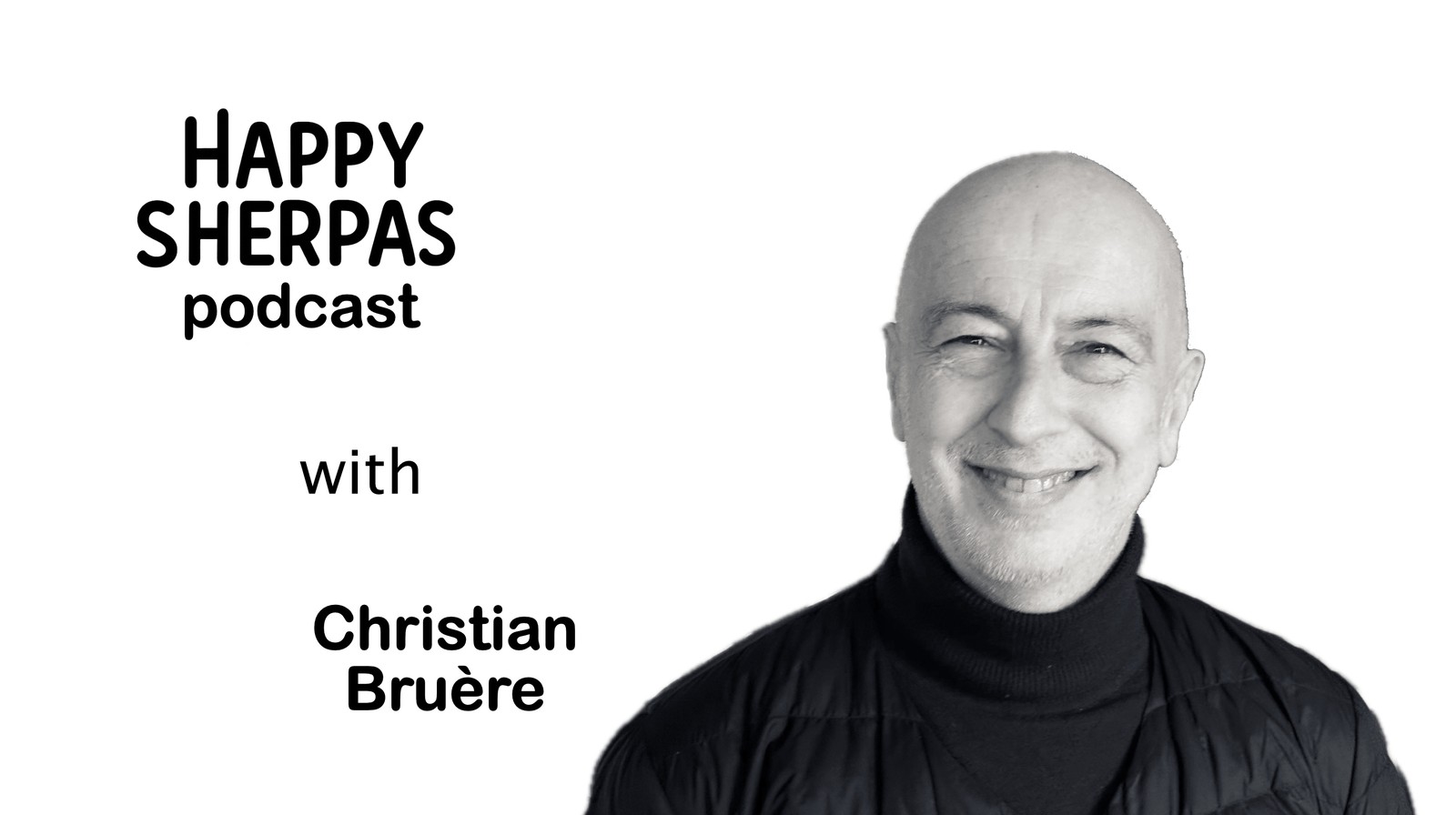
I am excited to announce the release of the second episode of our podcast, Happy Sherpas, co-hosted with Virginie Vitiello. In this episode, we had the pleasure of welcoming Christian Bruère, French entrepreneur and visionary industrialist, co-founder of Mob-ion. Christian is on a mission to redefine electric mobility through circular design and local manufacturing.
Recycling is a confession of design failure
Christian shares his philosophy of Circular Program Sustainability that redefines the industrial logic beyond planned obsolescence. Before recycling, there are many other “re-” that should be explored and integrated into the conception of a product: reuse, remake, repair, repurpose, recondition, etc. As Christian put it,
Sustainability starts at the drawing board, not at the waste bin.
What I find extraordinary, is that this design philosophy also starts with the user in mind: how and where will the product be used, how often, in what conditions, etc. This may seem natural, but industrial constraints and over-optimisations to reduce costs often also play a big role in design. But shifting the objective to maximising the customer satisfaction over the full lifespan of a product means one has to integrate the total cost of ownership.
I mentioned in a previous letter that luxury items were often more ecological and cheaper in the long run just because they are more often than not repairable. Whether one buys a CHAPOGET suitcase that will last a life time or a rents a Mob-ion scooter that will require minimal service (integrated into the rental price), long-term savings are real.
But also, we are collectively saving ressources by doing so! And as our planet is one and ressources are limited, we are probably saving even more in the long run, though this is not often correctly valued in prices.
Contributing to a resilient economy
Circular business models also transforms social and industrial ecosystems. At Mob-ion, returned vehicles are disassembled, repaired, and reconditioned locally. This creates precious jobs in an economy that still suffers from high unemployment. Mob-ion supports schools and adapted work environments, and builds new professional pathways around repair and remanufacturing. Christian describes it as a renaissance of industry: a circular, cooperative, and local model that values human work and promotes territories.
This change is cultural as much as it is economical.
And yes, local jobs are often more expensive. But smart design will more than compensate by making products easy to disassemble and reassemble. Mob-ion’s life cycle analysis shows an 87% reduction in environmental impact compared to conventional vehicles! And I was amused to hear Christian complain about glues in motors, just like we (at Chapoget) complain about glue in suitcases.
Overall, designing with the total cost of ownership in mind means a product will cost less in the long run. From there, we intuitively know it is creating more value than a disposable product. As Christian puts it, throwing away and burning materials cannot be economically efficient.
The question becomes one of business model: how can the company capture enough of the value created to be profitable. Mob-ion went into rental to share the benefit of the low cost of maintenance it had designed. Luxury brands create enough emotional value to justify a profitable initial price.
The challenge of financing longevity models
With the notable exception of infrastructure funds, traditional financing is designed for short-term cycles and does not fit the needs of circular business models. As Christian puts it:
If banks only offer 24 or 36 month loans, but the product is designed to last 20 to 30 years, short-term repayment kills profitability.
I would add that unfortunately, most equity investors also adopt such a short-term view and look at similar investment horizons.
Christian advocates for a new accounting approach that would treat strategic components like copper, magnets, or stainless steel as patrimonial assets rather than depreciating ones. This would mean that rather than amortising these components in the company books, they would retain their value, just like land. After all, they will survive the company!
In Europe even more than elsewhere as we are poor in natural ressources, public banks and impact investors could play a crucial role in supporting these models, for example, by guaranteeing funds for evergreen components.
After all, these models are profitable even today, with a relative lack of financing. They are sometimes born from an intention to build environmental friendly businesses, but they can also be the result of a search to maximise profitability, just like Mob-ion did to capture the value of its savings.
Designing the future
Listening to Christian, we are reminded that the future is something to design, not predict. Circular Program Sustainability demonstrates that profitability, ecological impact, and social value go hand in hand when products are designed for longevity.
Listen to Happy Sherpas on Apple Podcast, Spotify, or YouTube.
As usual, this letter, originally published on LinkedIn, is meant to open a discussion: join it here.
Lenny Kessler